
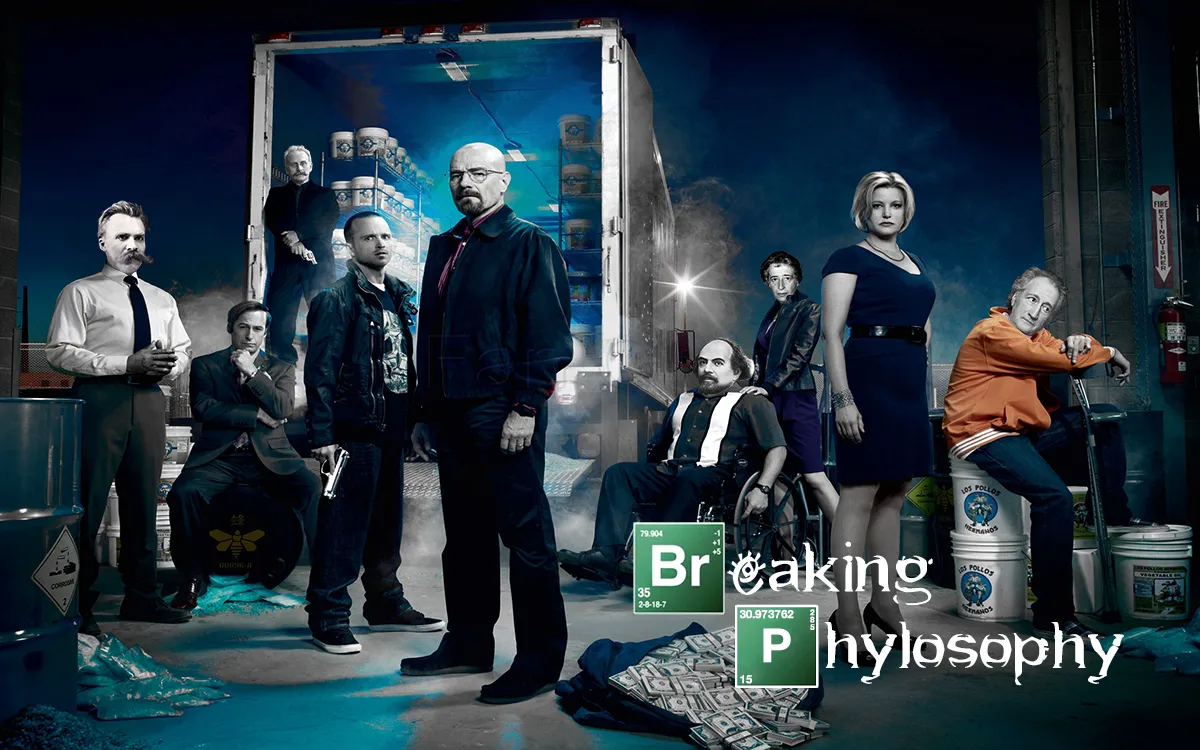
When people ask me what makes Breaking Bad one of the greatest television achievements of all time, I don’t just point to the tension or the acting. For me, the show’s true brilliance lies in its uncomfortable philosophical questions. It isn’t just a story about a chemistry teacher making meth; it’s a profound exploration of human nature, morality, and the slow erosion of the soul.
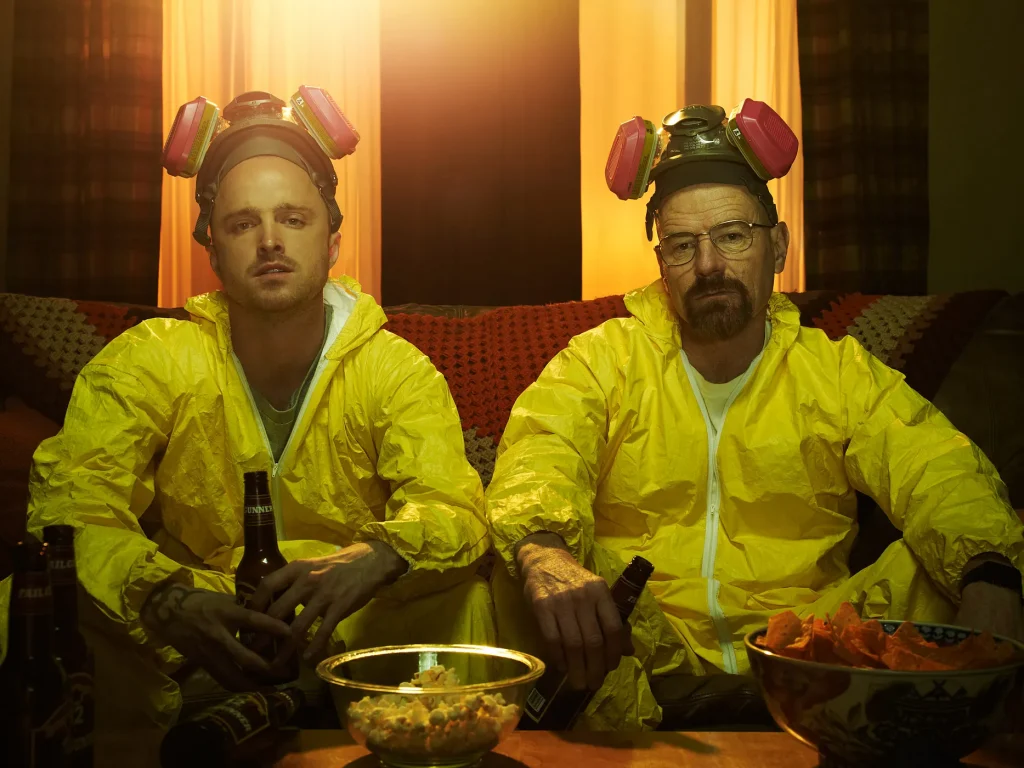
The Myth of the “Good Man”
From the start, Walter White is presented as a victim of circumstances—a brilliant mind wasted in a high school classroom, facing a terminal diagnosis. Initially, I, like many viewers, found myself rooting for him. We often tell ourselves that we are “good” people who would only do “bad” things for the right reasons. But through Walt, the show challenges this very notion. It asks: is there a core “self” that remains good, or are we simply the sum of our actions?
Nietzsche and the Will to Power
Watching Walter’s transformation into Heisenberg, I couldn’t help but see the echoes of Friedrich Nietzsche’s philosophy. Walt’s journey is a literal manifestation of the “Will to Power.” He moves from a state of passive resentment to one of ultimate, albeit destructive, self-actualization. As the seasons progress, it becomes clear that the money was never the primary goal. As Walt eventually admits in the finale—a moment that sent chills down my spine—he did it for himself. He did it because he was good at it, and because it made him feel alive.

The Shadow of Moral Relativism
One of the most fascinating aspects for me is how the show handles moral consequences. In the world of Breaking Bad, the universe isn’t indifferent; it’s almost karmic. Every action has an equal and opposite reaction. I observed how every “small” compromise Walt made led to an inescapable ripple effect of tragedy. The show firmly rejects moral relativism—the idea that you can do “a little bit of evil” for a “greater good” without being consumed by it.
Jesse Pinkman: The Moral Compass in the Dark
If Walter represents the descent into cold, calculated egoism, Jesse Pinkman represents the agonizing struggle of the conscience. While Walt hardens his heart to survive, Jesse’s soul remains exposed. For me, Jesse is the emotional heart of the series. His suffering serves as a constant reminder of the human cost of Walter’s ambition. He is the one who truly feels the weight of the blood on their hands, providing a stark contrast to Walt’s increasing detachment.

The Legacy of Heisenberg
Ultimately, Breaking Bad serves as a modern-day Greek tragedy. It’s a cautionary tale about the dangers of pride and the ease with which a “civilized” man can abandon his humanity when given a taste of power.
Even years after the finale, I find myself reflecting on Walter White’s choices. The show doesn’t give us easy answers, and that’s why it lingers. It forces us to look in the mirror and ask: under the right (or wrong) conditions, how far would we go?