When Ridley Scott announced a sequel to Gladiator, a film that defined the historical epic for a generation, I felt a mix of genuine excitement and deep-seated skepticism. How do you follow a story that concluded so definitively with the death of Maximus? Can you catch lightning in a bottle twice? After walking out of the theater, I can say that while Scott hasn’t reinvented the wheel, he has certainly reminded us why he is the master of the grand spectacle.
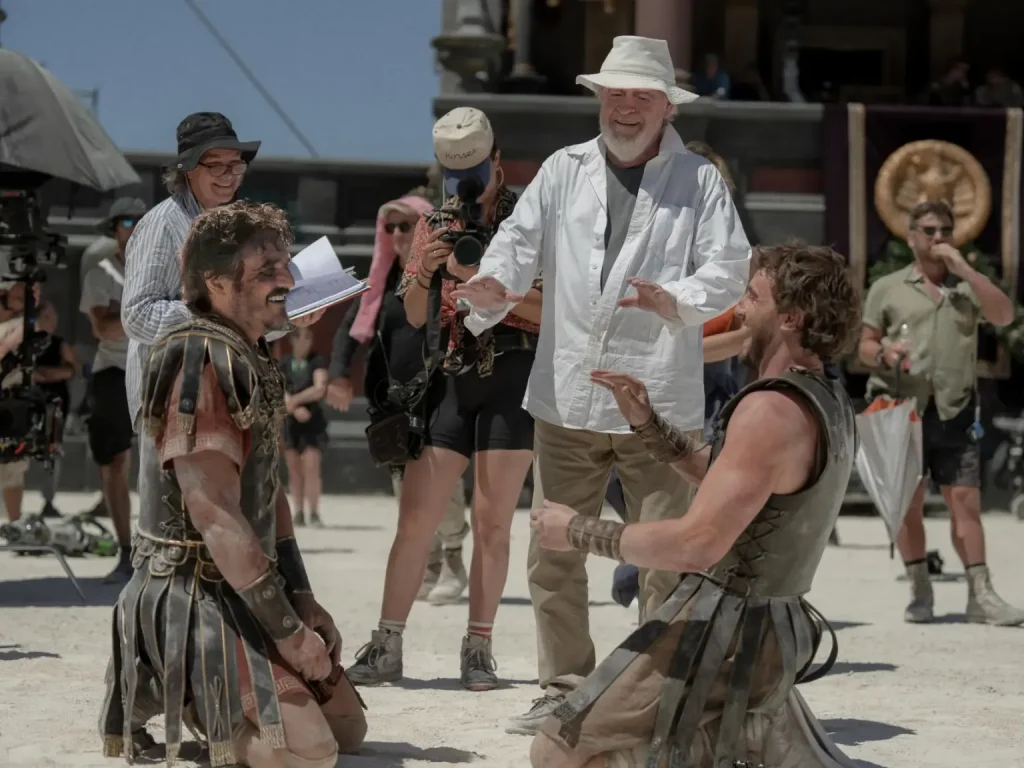
To me, Gladiator II feels like a massive, blood-stained opera. It doesn’t try to be a subtle historical drama; instead, it leans into the visceral, almost carnivalesque nature of the Roman Empire in its decline.
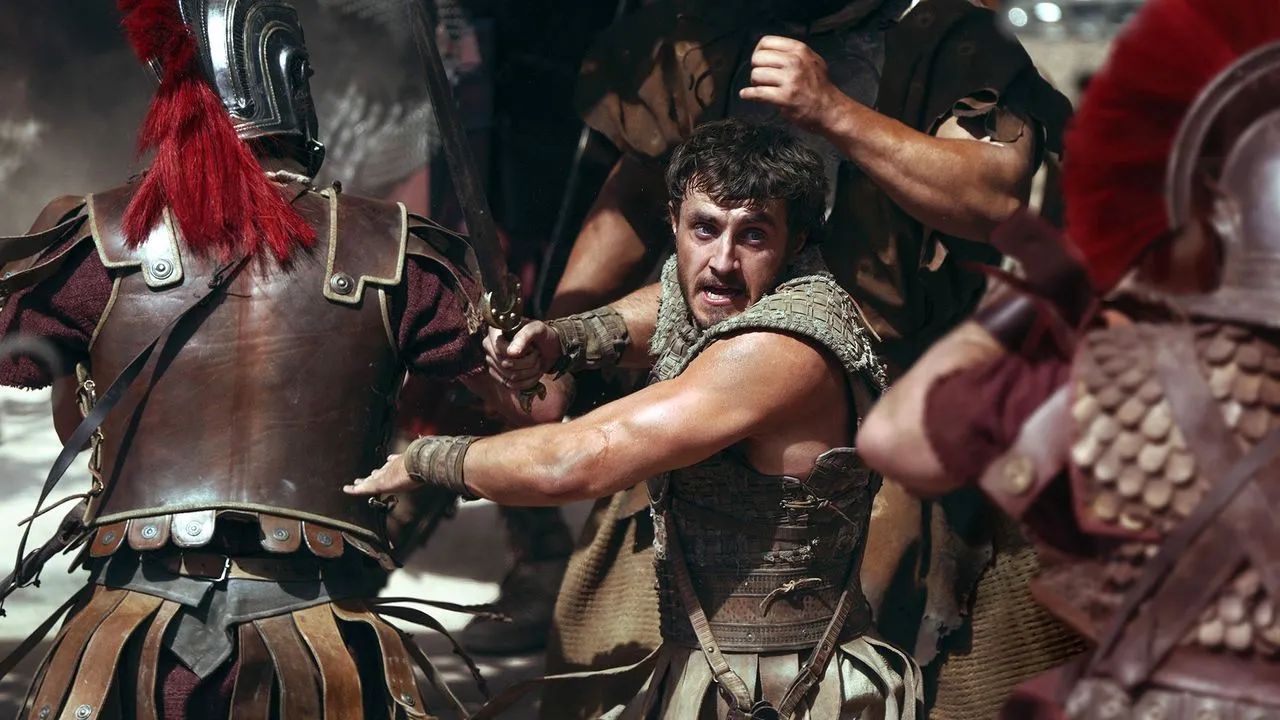
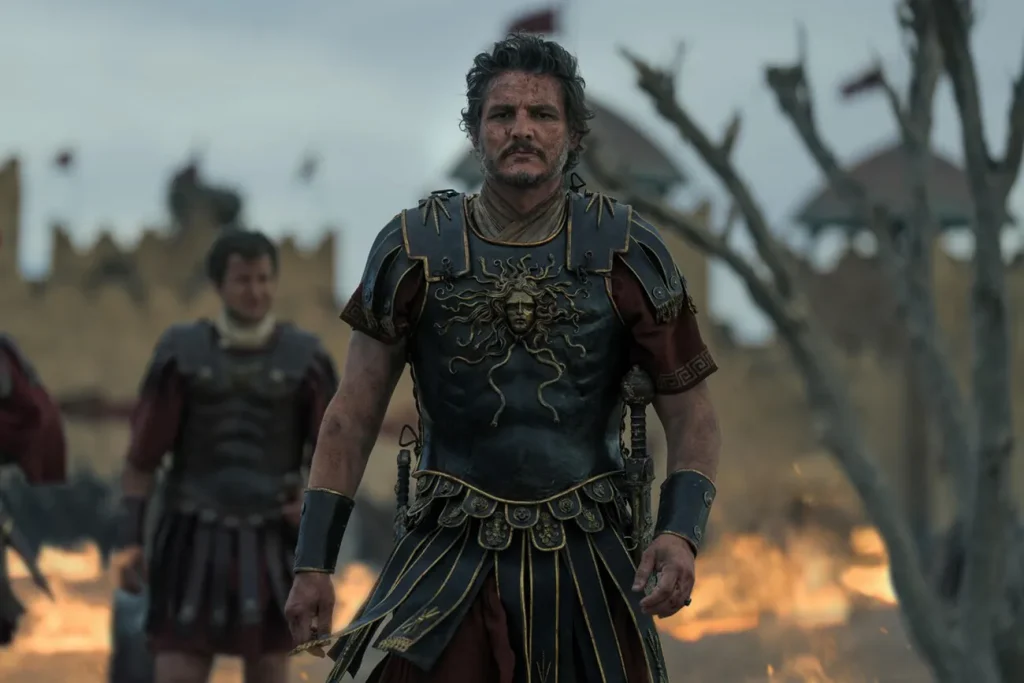
The story picks up decades later, focusing on Lucius (played by Paul Mescal), whom we remember as the young boy from the first film. He has been living in North Africa, far from the rot of Rome, until the Roman legions—led by the weary but efficient General Acacius (Pedro Pascal)—shatter his life. Watching Lucius being dragged back to the city his mother once tried to save is a powerful narrative anchor.
Lucius
Paul Mescal was a revelation for me here. He doesn’t try to imitate Russell Crowe’s stoic gravitas. His Lucius is fueled by a raw, jagged anger. You can see the internal conflict in his eyes—a man who hates Rome but is forced to become its ultimate entertainer.
However, if I have to be honest about who truly owns this movie, it’s Denzel Washington. As Macrinus, a wealthy arms dealer and power player, he is absolutely electric. He plays the role with a cunning, flamboyant edge that makes every scene he’s in feel dangerous. Every time he spoke, I found myself leaning in, waiting to see how he would manipulate the twins—the two “mad emperors” Geta and Caracalla. Speaking of the emperors, Fred Hechinger and Joseph Quinn are delightfully grotesque, embodying the decadence and instability of a collapsing state.
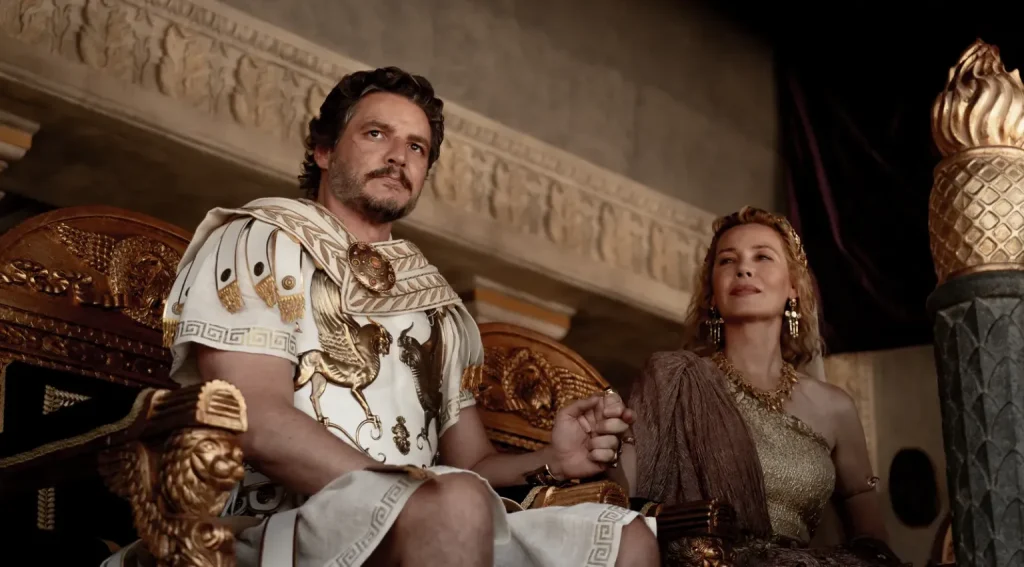
Ridley Scott’s vision of the Colosseum is where the film truly shines. We get baboons, sharks in a flooded arena (yes, really!), and a level of practical-feeling scale that modern CGI-heavy blockbusters often miss. I found the action sequences to be brutal and expertly choreographed, though perhaps lacking the poetic soul that made the original’s fights feel so intimate.
The central theme that resonated with me was the “Dream of Rome.” Is Rome worth saving? Can the cycle of violence ever be broken? The film constantly echoes the first part—sometimes a bit too literally with flashbacks and familiar musical cues from Hans Zimmer’s original score (reimagined here by Harry Gregson-Williams). At times, it felt like Scott was trying too hard to remind us of Maximus, which occasionally pulled me out of Lucius’s own journey.
______
Ultimately, Gladiator II is a film about the echoes of our fathers and the weight of legacy. It’s loud, it’s violent, and it’s unashamedly grand. It might not have the emotional purity of the first film, but as a cinematic experience, it is a formidable return to the arena. Rome has fallen into madness, and I found every minute of that chaos fascinating to watch.